
Agilent J&W GC Columns
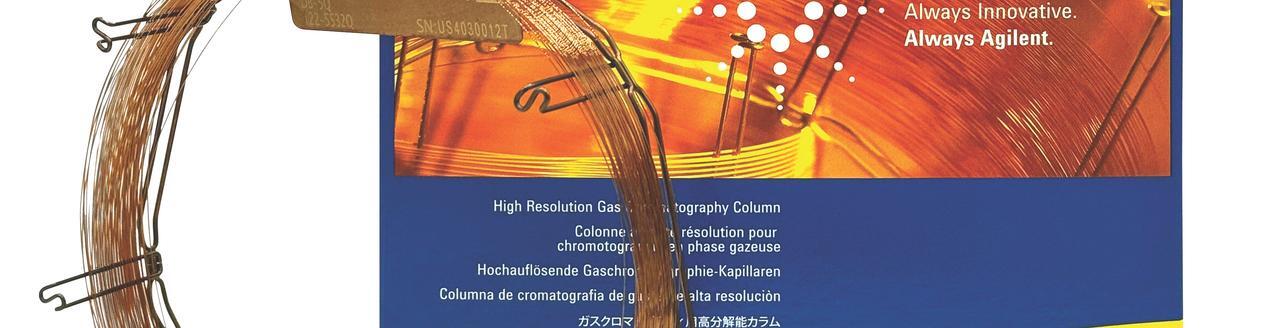
Agilent J&W GC Columns
Agilent J&W GC columns are a trusted standard for capillary gas chromatography, built for consistent retention, reliable selectivity, and rugged performance across routine and high-sensitivity workflows. From nonpolar general-purpose phases to mid- and higher-polarity chemistries designed to resolve difficult isomers, Agilent J&W columns support fast method development, stable QC methods, and confident confirmatory separations.
Chrom Tech supplies a broad range of Agilent J&W DB, HP, CP-SIL, and Ultra phase options so you can tune selectivity without changing instruments or detection strategy. Choose your phase based on the interactions you need—boiling-point-driven separation for simple screening, added aromatic/isomer selectivity for challenging mixtures, or specialty polar phases for targeted applications.
How to Choose a Phase
- Nonpolar (DB-1 / HP-1 / Ultra 1): volatility-driven separations for broad screening and hydrocarbons.
- Low polarity “5-type” class (DB-5 / HP-5 / Ultra 2 / CP-SIL 5 CB): general-purpose phase with enhanced aromatic selectivity.
- Mid polarity phenyl/selectivity shifts (DB-35 / HP-35 / CP-SIL 8 CB): improved resolution for aromatics and isomers when 5-type phases coelute.
- Intermediate/specialty (DB-17 / DB-1701 and other specialty phases): confirmatory selectivity and application-driven separations for complex mixtures.
Common Applications
- Environmental and industrial VOC/SVOC screening
- Aromatics, solvents, and hydrocarbon profiling
- Isomer and structural-analog separations requiring selectivity tuning
- Method transfer, confirmatory runs, and routine QC workflows
For best results, match phase to your selectivity goal, then optimize column dimensions (length, inner diameter, and film thickness) to balance resolution, speed, and capacity. If you share your target analytes (or the catalog phase/spec table for this section), we can map an ideal starting phase and recommend dimensions for your detector and method constraints.
Chrom Tech is an authorized distributor of Agilent GC columns and supports selection for method development, replacements, and application-specific workflows.
Agilent J&W DB-1 is a classic nonpolar GC stationary phase built on 100% dimethylpolysiloxane. Retention is dominated by boiling point (volatility), making DB-1 a dependable “baseline” choice for broad screening and for analyte sets where you want minimal polar interactions.
- You want a nonpolar column where elution order is largely driven by boiling point
- You’re screening unknowns or building a fast, robust general method
- You’re working with hydrocarbons, solvents, and many low-polarity organics
| Stationary Phase | 100% dimethylpolysiloxane |
| Polarity | Nonpolar |
| Best For | General screening; hydrocarbons; low-polarity organics |
| Selectivity Notes | Boiling-point driven retention; minimal polar interaction |
| Closest Family | HP-1, Ultra 1 (similar nonpolar selectivity) |
Practical note: temperature limits and bleed performance depend on column format (ID, film thickness, and hardware). Use the product datasheet for exact limits.
Agilent J&W HP-1 provides DB-1-like nonpolar selectivity and is commonly used for routine analyses where you want predictable, boiling-point-driven separation without added polar retention.
- You want a reliable nonpolar “workhorse” column
- You need a nonpolar option for method transfer or legacy methods
- You prefer minimal phase interactions beyond volatility
| Stationary Phase | 100% dimethylpolysiloxane |
| Polarity | Nonpolar |
| Best For | Routine GC screening; hydrocarbons; solvents |
| Selectivity Notes | Boiling-point driven retention with minimal polar effects |
| Comparable Selectivity | DB-1, Ultra 1 |
Ultra 1 is a nonpolar dimethyl phase used for broad screening and general methods. It’s a strong choice when you want simple, predictable retention behavior and a straightforward method development starting point.
- You need a nonpolar column for general-purpose screening
- You want boiling-point-driven elution order with minimal polar interaction
- You’re matching or updating an existing Ultra-family method
| Stationary Phase | 100% dimethylpolysiloxane |
| Polarity | Nonpolar |
| Best For | General screening; hydrocarbons; low-polarity analytes |
| Comparable Selectivity | DB-1, HP-1 |
Agilent J&W DB-5 is one of the most widely used GC phases because it balances general-purpose separation with helpful aromatic selectivity from a phenyl-substituted polysiloxane chemistry. It’s often the first pick when a nonpolar dimethyl phase doesn’t provide enough selectivity.
- You want a broadly applicable “default” capillary phase for mixed analyte sets
- You need a step up in selectivity versus DB-1/HP-1 for aromatics and mid-polar compounds
- You want robust, well-documented method behavior for routine work
| Stationary Phase | Low-polarity phenyl-substituted methylpolysiloxane (DB-5 class) |
| Polarity | Low polarity |
| Best For | General methods; aromatics; semivolatiles; environmental and industrial samples |
| Selectivity Notes | More aromatic interaction than pure dimethyl; often improves critical pair resolution |
| Closest Family | HP-5, Ultra 2, CP-SIL 5 CB (similar low-polarity class) |
Agilent J&W HP-5 delivers DB-5-like low-polarity selectivity and is commonly chosen for general GC workflows where you want broad compatibility across compound types, including many aromatic and semivolatile analytes.
- You want a widely used low-polarity phase for routine methods
- You’re matching an existing HP-5 method or transitioning from a DB-5 class phase
- You want improved selectivity versus dimethyl phases without moving to mid-polar columns
| Stationary Phase | Low-polarity phenyl-substituted methylpolysiloxane (HP-5 class) |
| Polarity | Low polarity |
| Best For | General methods; aromatics; semivolatiles |
| Comparable Selectivity | DB-5, Ultra 2, CP-SIL 5 CB |
Ultra 2 is a low-polarity phase in the common “phenyl-substituted polysiloxane” class. It’s frequently used when you want a general phase with stronger aromatic selectivity than a pure dimethyl column.
- You need DB-5/HP-5-like selectivity in an Ultra-family method
- Aromatics or semivolatiles need better separation than on nonpolar dimethyl phases
- You want a versatile low-polarity screening column
| Stationary Phase | Low-polarity phenyl-substituted polysiloxane (Ultra 2 class) |
| Polarity | Low polarity |
| Comparable Selectivity | DB-5, HP-5, CP-SIL 5 CB |
CP-SIL 5 CB is a low-polarity phase in the widely used “5-type” polysiloxane class, often selected for broad screening and semivolatile analyses where you want a strong balance of retention and selectivity.
- You want a low-polarity general column with dependable selectivity for mixed samples
- You’re targeting aromatics, many semivolatiles, and industrial/environmental analytes
- You need “DB-5/HP-5 class” behavior in a CP-SIL family
| Stationary Phase | Low-polarity polysiloxane (“5-type” class) |
| Polarity | Low polarity |
| Comparable Selectivity | DB-5, HP-5, Ultra 2 |
CP-SIL 5 CB Ultimetal keeps the same low-polarity “5-type” selectivity while using metal column hardware intended for demanding environments and mechanical robustness.
- You want CP-SIL 5 CB-like selectivity with more rugged column construction
- You’re running harsher sample matrices and prioritize durability
- You want a low-polarity general phase in a metal column format
| Stationary Phase | Low-polarity polysiloxane (“5-type” class) |
| Polarity | Low polarity |
| Hardware | Metal (Ultimetal) column format |
| Comparable Selectivity | DB-5 / HP-5 class behavior (selectivity-focused match) |
Agilent J&W DB-35 is a mid-polarity polysiloxane phase with increased phenyl character, often chosen when DB-5-class columns don’t provide enough separation power for aromatics, isomers, or structurally similar analytes.
- You need stronger aromatic and isomer selectivity than DB-5/HP-5
- Critical pairs coelute on low-polarity “5-type” columns
- You want mid-polar selectivity without moving to highly polar PEG/WAX phases
| Stationary Phase | Mid-polarity phenyl-substituted polysiloxane (DB-35 class) |
| Polarity | Mid polarity |
| Best For | Aromatics, isomers, semivolatiles needing stronger selectivity |
| Selectivity Notes | Enhanced aromatic interaction vs. 5-type columns |
Agilent J&W HP-35 is a mid-polarity phase in the higher-phenyl polysiloxane class. Choose it when you need stronger aromatic/isomer resolution than low-polarity 5-type columns can deliver.
- You need DB-35-class selectivity in an HP-family method
- Aromatic isomers require better separation than DB-5/HP-5
- You want mid-polar selectivity for semivolatiles and related mixtures
| Stationary Phase | Mid-polarity phenyl-substituted polysiloxane (HP-35 class) |
| Polarity | Mid polarity |
| Comparable Selectivity | DB-35 |
CP-SIL 8 CB is a mid-polarity phenyl-rich polysiloxane phase selected to improve separation of aromatics and isomers when low-polarity 5-type columns are not selective enough.
- You need stronger aromatic/isomer selectivity versus CP-SIL 5 / DB-5 class
- Critical pairs require a selectivity “step up” without moving to highly polar columns
- You want mid-polar performance in the CP-SIL family
| Stationary Phase | Mid-polarity phenyl-substituted polysiloxane (CP-SIL 8 class) |
| Polarity | Mid polarity |
| Best For | Aromatics and isomers needing higher selectivity than 5-type phases |
Agilent J&W DB-17 is a mid-polarity phase often chosen as an “intermediate selectivity” option between low-polarity 5-type columns and more polar specialty phases. It can be a practical method-development move when you need a noticeable change in selectivity without going fully polar.
- You need a meaningful selectivity change from DB-5-class columns
- You have mixed semivolatiles where mid-polar interactions improve resolution
- You want an intermediate phase for confirmatory separations
| Stationary Phase | Mid-polarity polysiloxane (DB-17 class) |
| Polarity | Mid polarity |
| Best For | Mixed semivolatile mixtures; confirmatory selectivity vs. low-polarity phases |
| Selectivity Notes | Intermediate selectivity for method development and verification |
Agilent J&W DB-1701 is a widely used mid-polarity phase for complex mixtures and semivolatile workflows where you want more interaction than DB-5-class phases provide, but you still want a broadly applicable, rugged column choice.
- You need a mid-polarity “workhorse” for complex semivolatiles
- You want confirmatory selectivity different from DB-5/HP-5 class
- You need improved separation of compounds with modest polarity differences
| Stationary Phase | Mid-polarity polysiloxane (DB-1701 class) |
| Polarity | Mid polarity |
| Best For | Complex semivolatiles; confirmatory methods; mixed polarity analytes |
Agilent J&W DB-23 is a more polar, specialty selectivity phase commonly selected when low- and mid-polar columns cannot resolve critical isomers. It’s often used for targeted separations where polar interactions and shape selectivity are important.
- You’re separating closely related isomers that coelute on DB-5/DB-35/DB-1701 classes
- You need a more polar interaction profile for your target analyte set
- You want a confirmatory column with a distinct selectivity shift
| Separation Focus | Targeted, higher-polarity selectivity for difficult pairs |
| Polarity | Polar / specialty |
| Best For | Challenging isomer separations; confirmatory methods |
| Selectivity Notes | Provides a meaningful selectivity “reset” vs. common 5-type columns |
Agilent J&W DB-225 is a polar specialty phase used to produce a major change in retention and resolution for specific compound classes. It’s commonly used when method development needs a larger selectivity move than mid-polar phenyl phases can provide.
- You need a strong selectivity change to resolve stubborn coelutions
- You’re targeting compounds where polar interactions drive separation quality
- You want a confirmatory method with a clearly different elution order
| Separation Focus | Targeted polar selectivity and stronger elution-order changes |
| Polarity | Polar / specialty |
| Best For | Methods needing a large selectivity shift vs. low/mid-polar columns |
Agilent J&W DB-210 is a specialty selectivity column chosen for analyte sets where common low- and mid-polar columns do not provide adequate resolution. It’s typically selected for targeted applications where separation depends on more specific interaction profiles.
- Your method requires a distinct selectivity shift for better resolution
- Functional-group-driven selectivity is more important than volatility-only behavior
- You want a confirmatory column option with different retention behavior
| Separation Focus | Targeted selectivity for improved resolution in complex mixtures |
| Polarity | Specialty / application-driven |
| Best For | Workflows that need a deliberate selectivity change vs. common phases |
Agilent J&W DB-200 is a specialty column option used when you need an alternative interaction profile to separate difficult compounds that do not resolve on conventional low- or mid-polar polysiloxane phases.
- You need a selectivity “rescue” beyond DB-5/DB-35/DB-1701 classes
- Your analytes benefit from a different interaction profile than standard phenyl columns
- You want a confirmatory method with distinct retention behavior
| Separation Focus | Alternative selectivity for challenging separations |
| Polarity | Specialty / application-driven |
| Best For | Critical pairs requiring a meaningful selectivity change |
Agilent J&W DB-1301 is a specialty, method-driven phase used when your application calls for a specific selectivity profile (often tied to defined workflows or legacy methods) rather than a generic polarity-based choice.
- You are matching an existing DB-1301 method or specification
- You need a defined selectivity profile for consistent method transfer
- General phases (DB-1/DB-5/DB-35) do not provide the needed elution order
| Separation Focus | Application/method-driven selectivity profile |
| Polarity | Specialty |
| Best For | Method matching and consistent transfer across labs |
CP-SIL 19 CB is a polar specialty phase used when you need a strong selectivity shift from low- and mid-polar polysiloxane columns. It’s commonly applied as a confirmatory column or for targeted separations where polarity-driven interactions are essential.
- You need a substantial selectivity change to resolve critical coelutions
- You’re building a confirmatory method with different elution order than DB-5/DB-35 class
- Your target analytes benefit from stronger polar interactions
| Separation Focus | Polar specialty selectivity / confirmatory separations |
| Polarity | Polar / specialty |
| Best For | Targeted separations requiring a strong selectivity shift |
Chrom Tech is an authorized distributor of Agilent GC columns. If you share the exact phase spec table (polarity ratings, temp limits, bleed class, etc.) from the catalog page for this GC group, I can tighten the phase meta lines and spec tables to match the published values precisely.
Nonpolar dimethyl phase for volatility-driven separations and broad screening methods.
- Boiling-point selectivity
- Excellent for hydrocarbons
- General-purpose GC methods
HP-series nonpolar workhorse phase for routine GC separations with predictable retention.
- Robust, familiar selectivity
- Great starting column
- Broad compound coverage
Low-polarity “5-type” phase for balanced selectivity across aromatics and semivolatiles.
- General-purpose low polarity
- Good aromatic resolution
- Method development friendly
Metal-clad version of CP-SIL 5 CB designed for rugged handling and reliable performance.
- Rugged metal-clad construction
- Low-polarity “5-type” selectivity
- Great for demanding labs
Nonpolar dimethyl-style phase built for clean baselines and fast, volatility-based separations.
- Nonpolar screening column
- Hydrocarbon profiling
- Stable retention behavior
Low-polarity “5-type” selectivity to improve aromatic resolution versus nonpolar phases.
- Balanced low-polarity selectivity
- Improved aromatic/isomer resolution
- Versatile for mixed matrices
Industry-standard low-polarity “5-type” phase for broad GC screening and method transfer.
- Classic general-purpose choice
- Strong aromatic selectivity
- Great for SVOCs
HP-series 5-type phase delivering versatile selectivity for routine environmental and industrial GC.
- Wide analyte range
- Reliable method performance
- Excellent for aromatics
Mid-polarity phase for enhanced separation of aromatics, isomers, and structurally similar compounds.
- Mid-polar selectivity shift
- Improves isomer resolution
- Great “rescue” option
Mid-polar 35% phenyl phase engineered to improve aromatic resolution and difficult separations.
- 35% phenyl selectivity
- Improved PAH separation
- Better isomer discrimination
HP-series 35% phenyl phase for enhanced aromatic selectivity and mid-polar method development.
- Mid-polar workflow
- Strong aromatic resolution
- Useful for confirmatory runs
Mid-high polarity phenyl phase for stronger selectivity when 5-type columns cannot resolve isomers.
- Enhanced isomer separation
- Better aromatic discrimination
- Useful for complex mixtures
Polar phase commonly selected for fatty acid and ester separations requiring strong polarity-driven retention.
- Polar selectivity for esters
- Excellent for FAME-style methods
- Improves cis/trans resolution
Polar, oxygenate-friendly selectivity for challenging matrices where low-polarity phases coelute.
- Enhanced oxygenate separation
- Useful for solvents & flavors
- Strong polarity-driven retention
Mid-to-polar selectivity designed to separate oxygenates and polar volatiles with improved resolution.
- Polar volatile capability
- Improves separation vs 5-type
- Great for mixed oxygenates
Polar selectivity for halogenated and challenging isomeric compounds requiring a stronger interaction shift.
- Strong polar selectivity
- Great for halogenated analytes
- Improves difficult isomer splits
Intermediate polarity phase used to separate complex volatile mixtures with improved elution order control.
- Intermediate polarity leverage
- Useful for complex volatiles
- Good confirmatory selectivity
Mid-polar phase delivering a strong selectivity shift for environmental and industrial confirmatory methods.
- Mid-polar confirmation column
- Improves separation of VOC/SVOC
- Common for method transfer
High-polarity selectivity for fatty acids, esters, and isomer separations that need strong polarity control.
- High-polarity retention
- Excellent for esters/FAMEs
- Improves isomer resolution