Cyclodex-B
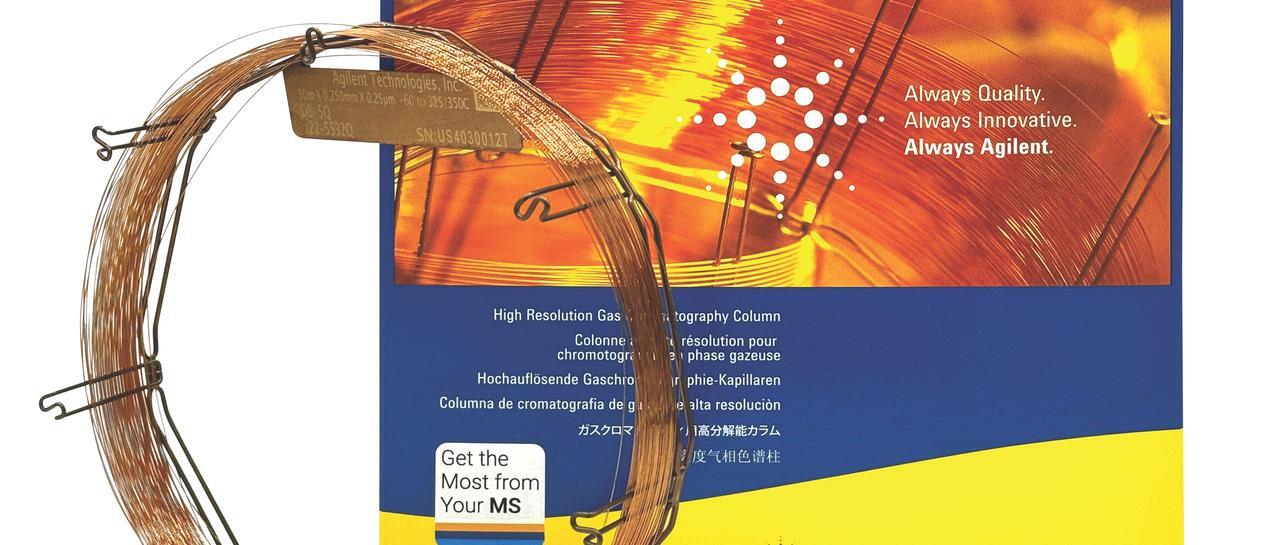
Agilent Cyclodex-B Chiral GC Columns
Agilent J&W Cyclodex-B GC columns utilize a 10.5% β-cyclodextrin stationary phase engineered for high-performance chiral separations. This cyclodextrin-based phase forms selective inclusion complexes with enantiomers, enabling efficient resolution of chiral compounds across a wide range of flavors, fragrances, essential oils, environmental contaminants, and specialty chemicals—without the need for chiral-specific derivatization.
Cyclodex-B delivers outstanding peak shapes, strong enantiomeric selectivity, and broad applicability, making it an excellent choice for laboratories requiring reliable separation of structurally similar enantiomers. Its sensitivity, precision, and reproducibility support confident quantitation and enantiomeric purity assessment in both routine QC workflows and advanced R&D environments. Whether applied to aroma-active compounds, chiral markers, or trace-level optical isomers, Cyclodex-B provides the stability and performance needed for demanding chiral analyses.
Cyclodex-B delivers outstanding peak shapes, strong enantiomeric selectivity, and broad applicability, making it an excellent choice for laboratories requiring reliable separation of structurally similar enantiomers. Its sensitivity, precision, and reproducibility support confident quantitation and enantiomeric purity assessment in both routine QC workflows and advanced R&D environments. Whether applied to aroma-active compounds, chiral markers, or trace-level optical isomers, Cyclodex-B provides the stability and performance needed for demanding chiral analyses.