
ProSEC 300S
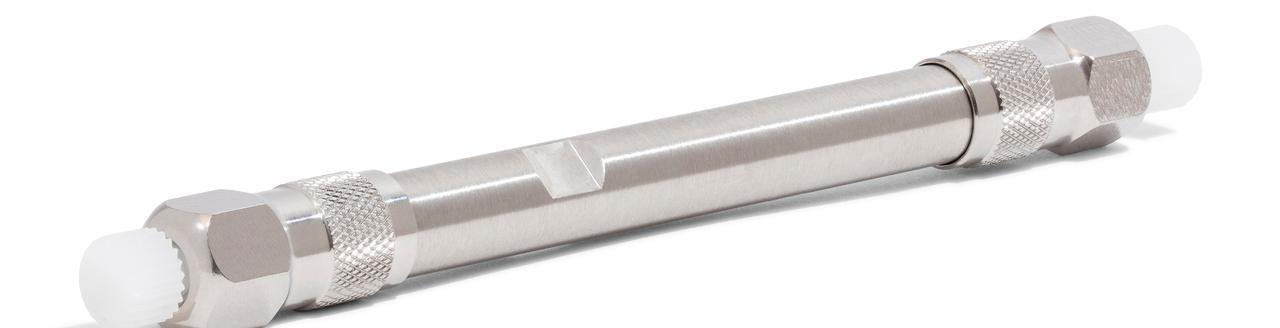
Agilent ProSEC 300S Size Exclusion Columns
Agilent ProSEC 300S columns are engineered as a single-column solution for globular protein characterization, eliminating the need to select from multiple pore sizes or column formats. Designed specifically for high-resolution SEC analysis, these columns provide exceptional separation of monomers, dimers, trimers, and higher-order aggregates with the consistency required for modern biopharmaceutical workflows.
- One-column solution for most globular proteins—no pore-size selection required.
- Mechanically robust silica platform minimizes column bleed and supports long operational life.
- Extended linear resolving range ensures accurate molecular weight determination across a broad size distribution.
- Multiple internal diameter (ID) options allow optimization for UV, RI, and multi-detector SEC workflows.
- Enhanced sensitivity with light-scattering detectors for confident detection of aggregates and low-abundance species.
ProSEC 300S columns are built on ultra-pure, highly stable silica optimized for biomolecule separations, allowing biotherapeutic developers to streamline method development and achieve reproducible, transferable SEC methods. Whether monitoring aggregation in monoclonal antibodies, profiling protein purity, or analyzing recombinant proteins, ProSEC 300S delivers the resolution and reliability needed for QC, R&D, and regulated environments.
For assistance selecting the best ProSEC 300S configuration for your biomolecule workflow, contact Chrom Tech.
Agilent ProSEC 300S is a high-performance, polymer-based size exclusion chromatography (SEC) column designed for accurate molecular weight characterization of proteins and other water-soluble polymers. Unlike silica-based SEC columns, ProSEC 300S uses a robust polymer packing that provides excellent stability across a broad pH range and improved resistance to degradation.
- You require accurate protein molecular weight determination
- You need improved chemical stability across varied buffer conditions
- You analyze aggregates, fragments, or oligomers
- You want consistent performance for QC or research environments
Compared to silica-based SEC columns, ProSEC 300S offers enhanced pH stability and durability. It is particularly well-suited for applications requiring extended column life or operation under moderately alkaline conditions.
| Separation Mode | Size Exclusion Chromatography (SEC) |
| Particle Type | Polymer-based packing |
| Pore Size | 300 Å |
| Application Range | Proteins, water-soluble polymers, aggregates, fragments |
| Mobile Phase | Aqueous buffer systems |
| Primary Use | Molecular weight characterization and aggregate analysis |
Practical note: Maintain appropriate ionic strength in the mobile phase to minimize secondary ionic interactions and ensure true size-based separation.
Product List
| SKU | Name | LC Column Phase | Particle Size | Inner Diameter (ID) | Length |
|---|---|---|---|---|---|
SKU
PL1547-5501
|
Name
PL1547-5501 - ProSEC 300S 250 x 4.6 mm
|
LC Column Phase
SEC
|
Particle Size
5 um
|
Inner Diameter (ID)
4.6 mm
|
Length
250 mm
|
SKU
PL1547-1501
|
Name
PL1547-1501 - ProSEC 300S Guard 50 x 4.6 mm
|
LC Column Phase
SEC
|
Particle Size
5 um
|
Inner Diameter (ID)
4.6 mm
|
Length
50 mm
|
SKU
PL1147-6501
|
Name
PL1147-6501 - ProSEC 300S, 300x7.5mm
|
LC Column Phase
SEC
|
Particle Size
5 um
|
Inner Diameter (ID)
7.5 mm
|
Length
300 mm
|
SKU
PL1147-1501
|
Name
PL1147-1501 - ProSEC 300S Guard, 50x7.5mm
|
LC Column Phase
SEC
|
Particle Size
5 um
|
Inner Diameter (ID)
7.5 mm
|
Length
50 mm
|