Protein Crash Filter Plates
Protein Crash Filter Plates for Semi-Automated Workflows
Chrom Tech’s Protein Crash Filter Plates provide a streamlined, high-throughput solution for protein precipitation and sample cleanup in bioanalytical laboratories. Designed to integrate precipitation and filtration into a single device, these plates reduce handling steps while delivering consistent, reproducible results for LC-MS and HPLC analysis.
A proprietary graded frit design efficiently removes precipitated proteins without clogging or breakthrough, producing clear filtrates ready for downstream analysis. Protein precipitation occurs directly inside each well, eliminating centrifugation and manual supernatant transfer—improving throughput while minimizing sample loss.
Key Benefits
- Supports semi-automated protein crash workflows for increased efficiency
- Accelerates analysis through parallel, high-throughput sample preparation
- Improves reproducibility by cleanly removing protein precipitate via filtration
- Eliminates manual supernatant transfer steps
- Fully compatible with standard liquid handling systems and automated laboratory processors
These plates conform to SBS microplate standards, allowing seamless integration into existing robotic platforms and positive-pressure processing systems.
Protein Crash Filter Plate Protocol
- Prepare an acetonitrile-to-serum ratio of 3:1 (v/v).
- Spike serum with the desired analytical standard.
- Add the acetonitrile/serum mixture to each well.
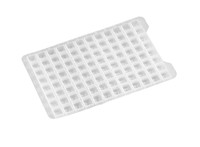
- Cover the plate with a cap mat and vortex thoroughly.
- Plates may be vortexed with collection trays in place to prevent plate tips from contacting the vortexer platform.
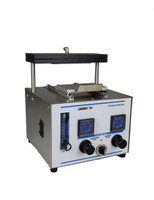
- Extract samples using positive pressure with Chrom Tech’s 96 Positive Pressure Processor (288-0001) .
| PART NO | DESCRIPTION | QTY |
|---|---|---|
| 96 WELL PLATE ACCESSORIES | ||
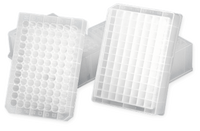
| 96-6001 | Round 1 mL Collection Plate | 50/cs |
| 96-6009 | Square 2 mL Collection Plate | 50/cs |
| ZAF-PE-50 | Adhesive Free Zone Sealing Film | 50/cs |
| 96-0662 | Capmat for Square Well Filter Plate | 50/cs |
| 96M-03 | 96 Round Sealing Silicone Mat, 7 mm | 10/pk |
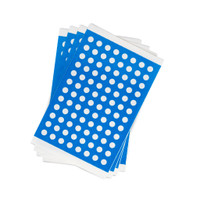
| BST-9790 | 2 mil Blue PTFE 96-Well Pattern Film | 100/cs |
| 96 WELL PLATE INSTRUMENTATION | ||
| 288-0001 | Positive Pressure Manifold for 96 Well Plate | ea |