
Solvent Waste Manifolds
HPLC and LCMS instruments generate solvent waste that typically contains volatile organic solvents such as acetonitrile and methanol. A closed waste HPLC system helps minimize solvent vapor exposure, reduce laboratory odors, and lower the risk of spills by keeping waste contained from the instrument to the collection bottle.
Chrom Tech waste collection manifolds allow multiple instrument effluent lines to be connected to a single laboratory waste bottle while maintaining a closed system. Since a sealed bottle must be vented as it fills, our exhaust filters direct vapors through an activated carbon cartridge that captures organic solvent vapors before they enter the laboratory—often eliminating the need to vent the waste bottle into a fume hood.
Chromatographers can continue using their existing laboratory waste bottles by selecting the appropriate manifold for their bottle style. The result is a simple, secure connection that improves solvent containment, supports industrial hygiene initiatives, and makes solvent waste collection cleaner, safer, and easier to manage.


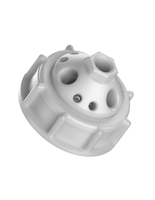
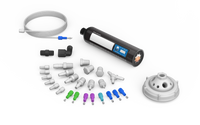
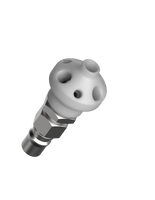
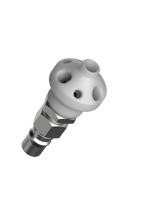


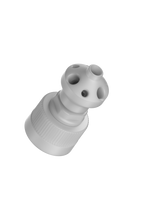

Solvent Waste Manifold
A laboratory fluid-handling component that connects multiple instrument effluent lines to a single solvent waste collection bottle.
Closed Waste HPLC System
A solvent waste collection system designed to keep liquid waste and solvent vapors contained from the HPLC or LCMS instrument to the collection bottle.
Instrument Effluent Line
Tubing that carries used mobile phase, sample residues, and other liquid waste away from an HPLC, LCMS, FPLC, SFC, or related laboratory instrument.
Volatile Organic Solvent
An organic solvent that readily evaporates at normal laboratory temperatures. Common chromatography examples include acetonitrile and methanol.
Exhaust Filter
A venting component that allows displaced air to leave a filling waste bottle while directing solvent vapors through filtration media.
Activated Carbon Cartridge
A replaceable filter cartridge containing activated carbon that captures many organic solvent vapors before they enter the laboratory.
Container Neck Finish
The standardized opening and thread configuration of a laboratory bottle or carboy. Available manifold options include GL38, GL45, Nalgene 53B, 63 mm, 83B, and 100-415 Nalgene connections.
Quick-Disconnect Connection
A fitting that allows a solvent waste line or manifold to be connected and disconnected without removing a threaded bottle cap. Compatible options are available for Justrite® Centura™ containers.
What is a solvent waste manifold?
A solvent waste manifold connects multiple instrument effluent lines to a single laboratory waste bottle. It provides an organized connection point for collecting solvent waste from HPLC, LCMS, FPLC, SFC, and other laboratory instruments.
Why should HPLC solvent waste be collected in a closed system?
A closed waste HPLC system helps keep liquid waste and solvent vapors contained from the instrument to the collection bottle. This can help minimize solvent vapor exposure, reduce laboratory odors, and lower the risk of spills.
Can one waste manifold collect effluent from multiple instruments?
Yes. A properly configured solvent waste manifold can connect multiple compatible effluent lines to one laboratory waste bottle. The number of connections, tubing dimensions, solvent compatibility, and combined flow rate should be considered when selecting a manifold.
Why does a sealed solvent waste bottle need an exhaust filter?
Air must leave the waste bottle as liquid enters. An exhaust filter provides a controlled vent path and directs displaced vapors through filtration media instead of allowing them to escape freely into the laboratory.
How does an activated carbon exhaust filter work?
The exhaust filter directs displaced air and solvent vapors through an activated carbon cartridge. The carbon captures many organic solvent vapors before they enter the laboratory and may eliminate the need to vent the waste bottle directly into a fume hood.
Can I use my existing laboratory waste bottle?
Yes. Chromatographers can continue using many existing laboratory waste bottles by selecting a manifold with the correct neck finish for the bottle.
Which bottle neck connections are available?
Available solvent waste manifold configurations include GL38, GL45, Nalgene 53B, 63 mm, 83B, and 100-415 Nalgene bottle connections. Quick-disconnect options are also available for compatible Justrite® Centura™ containers.
How do I select the correct solvent waste manifold?
Confirm the waste bottle neck style, number of instrument lines, tubing sizes, connection type, expected flow rate, and chemical compatibility. Also determine whether the system requires an exhaust filter, unused-port plugs, or quick-disconnect fittings.